


when everyone becomes a designer
WHEN EVERYONE BECOMES A DESIGNER


05/08/2026
There’s a familiar phrase often thrown at abstract artists: “a child could paint that.” It always bothered me because this one sentence diminishes the whole experience and journey that stands behind the work and the artist; the whole context gets flattened.
The time has come when designers can relate to the abstractionists a little bit. AI image generators can produce polished compositions from a single prompt. Platforms like Canva provide anyone with a “good-looking” layout in minutes. The barrier to entry has dropped so significantly that the thought and experience behind the design have become easier to overlook. New tension has arisen between clients and designers, making collaboration harder, because accessible tools are not synonymous with skills, but they are often perceived as such.
Communication aid or new obstacle?
More and more often, clients come to the table with ideas already visualised, through generative AI tools. On one hand, this looks like a helpful change in communication. And in many ways, it is. It shortens feedback loops and helps us understand expectations. But on the other hand, when a client arrives with something “already designed”, it in a way takes the creative power and authority from us. This gets intensified when AI-generated visuals ignore real-world constraints: production limitations, brand consistency, scalability, or even basic functionality.
Telling the harsh truth is a part of the job; the important next step, offering solutions, became harder with unrealistic expectations of immediate results and the constant approbation that AI normalises. This works, however, only when the designer’s expertise is not diminished. Rapid development influences the design process and client collaboration; the key is staying up to date and a good approach. We go into more depth on our strategy in this article.
 Two layers to accessibility
Adobe remains the industry standard; they win the Monopoly game when it comes to designer tools. And it shows in their prices. Ironically, the tools that allow designers to work faster and focus more on creative thinking are often the least accessible financially. In that sense, efficiency becomes a luxury.
Alternatives like Affinity (acquired by Canva) disrupted this model by offering professional-grade software without the need of subscription. For a moment, it looked like a shift towards accessibility. But what is available for free doesn’t allow for the focus on creativity. The automation of mundane tasks isn’t as flawless, even in simple tasks like cutting out objects from a background. So although the battle to destroy the monopoly has begun, the journey will be longer.
History suggests that tool dominance isn’t permanent. In the 90s, QuarkXPress was the industry standard for publishing. Adobe introduced InDesign and gradually reshaped the market. Today, Affinity positions itself as a challenger to Adobe in a similar way. But we can’t forget that the place on the podium has belonged to Adobe for more than 20 years now, and it has allowed them to grow and improve their offering, which is now hard to outdo.
When it comes to ease of use, Canva is one of the clearest examples of platforms improving design accessibility. Templates, automation, and machine-learning-driven suggestions make it possible for non-designers to produce professionally looking work. It’s great for those who want to learn to create as individuals and don’t have the budget. It makes it easier and cheaper to become a self-taught designer.
But is this the best way to learn? Are people more aware of layout, typography, and composition than they were? How does the accessibility of templates, not to mention generating images with one prompt, impact the quality of the industry?
At this point, clients must understand that we design strategically to help target specific customers; the function of design is as important as the looks, and the expertise designers have (and work for) is what makes it valuable and works in clients’ favour. There’s often the invisible function behind the aesthetics and the reason for well-designed ugliness that I’ve touched on in a different article, but it shows that there’s more to it than a template.
 Drowning in AI slop
Every major change in the industry (not only in the artistic fields) results in a shift and de-specialisation of said sector. There’s no doubt that accessibility has brought significant benefits, but it also contributes to the decline in quality.
Each time I go to LinkedIn, I see a wall of AI-generated posts, text, graphics, sometimes even comments. Maybe it works beneficially for my mental health because it makes me close the app, but is this the point of all of this? Is it all about quantity? Do we really need to post one piece of content every day, when clearly we’re not able to produce it ourselves? I feel like it hits harder when you realise that we delegate the creativity, one of the most human values.
We’re seeing an oversaturation of AI-generated content: quickly produced, often without depth or intention. Platforms are flooded with work that lacks clarity or purpose. Even when the message is interesting, the delivery is repulsive due to recognisable AI slop.
The value lies in knowing which ideas are worth developing, how they support a brand, and how they will work in the real world. The specialised knowledge that’s behind any good design becomes priceless with the popularisation of lower-quality (accessible) projects. Therefore, communication has become such an important part of the designer’s role: clients need to understand not only what they are paying for, but why certain decisions are being made.
 AI-notified
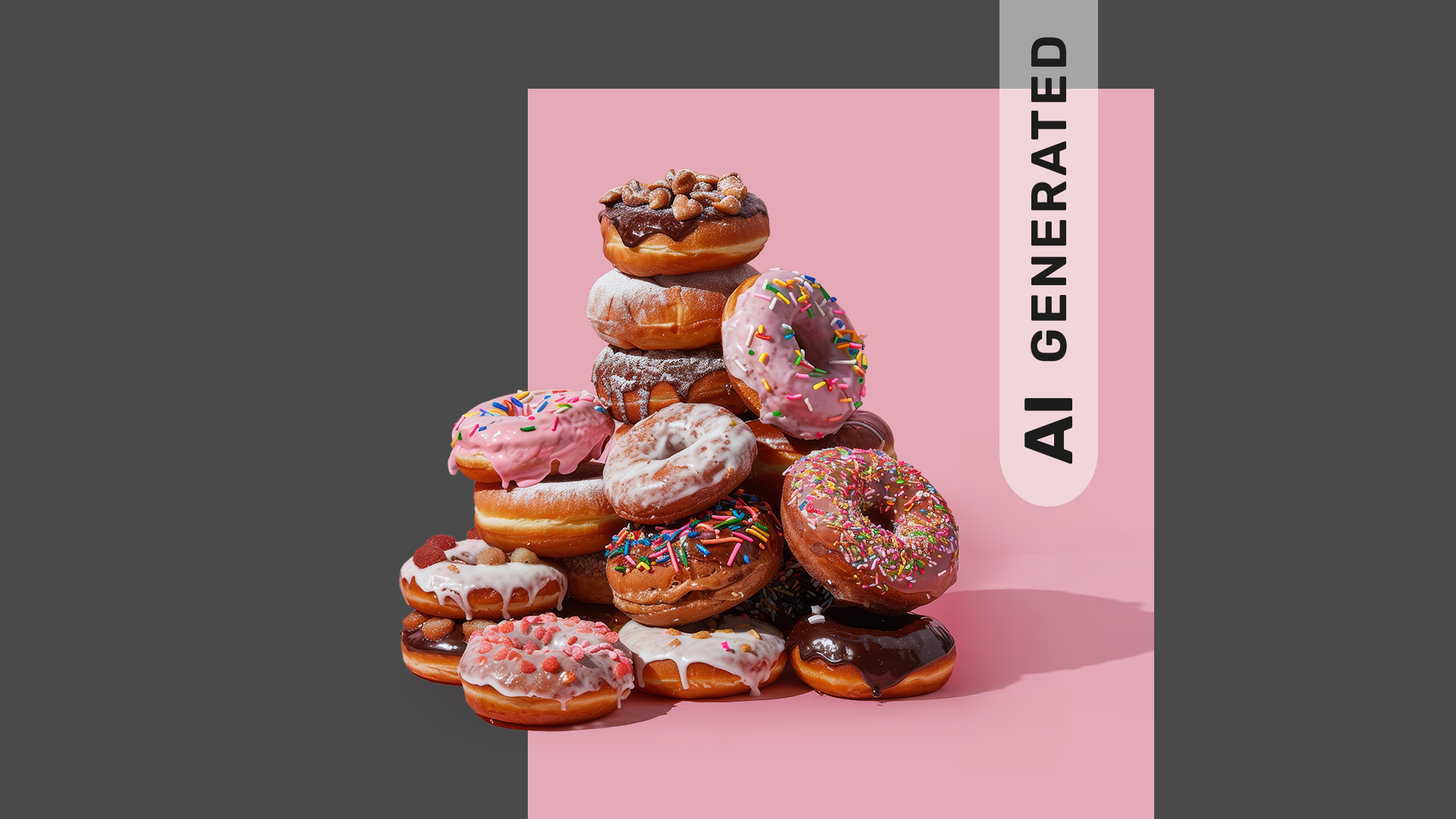
For someone in the industry, it can be easier to judge whether a picture was generated, but it’s becoming harder with each day, especially if the work is well done. European Union has introduced a law requiring AI-generated or modified graphics to be signed to prevent misleading consumers. It doesn’t concern all designs, but as the European Commission has stated, we need to mark every „AI-generated image of a product in advertisement or packaging that can affect the audience's perception and mislead as to the actual product appearance, characteristics or use.”
It’s the first major decision on this topic, and it obligates designers to be more transparent with their commercial work. This may also change the design process itself. Designers and agencies need to distinguish between fully generated and partially modified images, and discuss disclosure requirements with clients before publication. The commission has presented free symbols for use, different for fully generated images and different for those only modified.
With the growing reluctance towards AI, this change can heavily impact the industry and influence how clients view projects, not to mention changes in customer choices. There’s a high probability of a comeback of human-made photoshoots, or more artistic designs that still have looser rules in this department. We will see how it develops in the near future, but for now we need to be aware of this obligation and pay attention to obey it.
The new role of designers
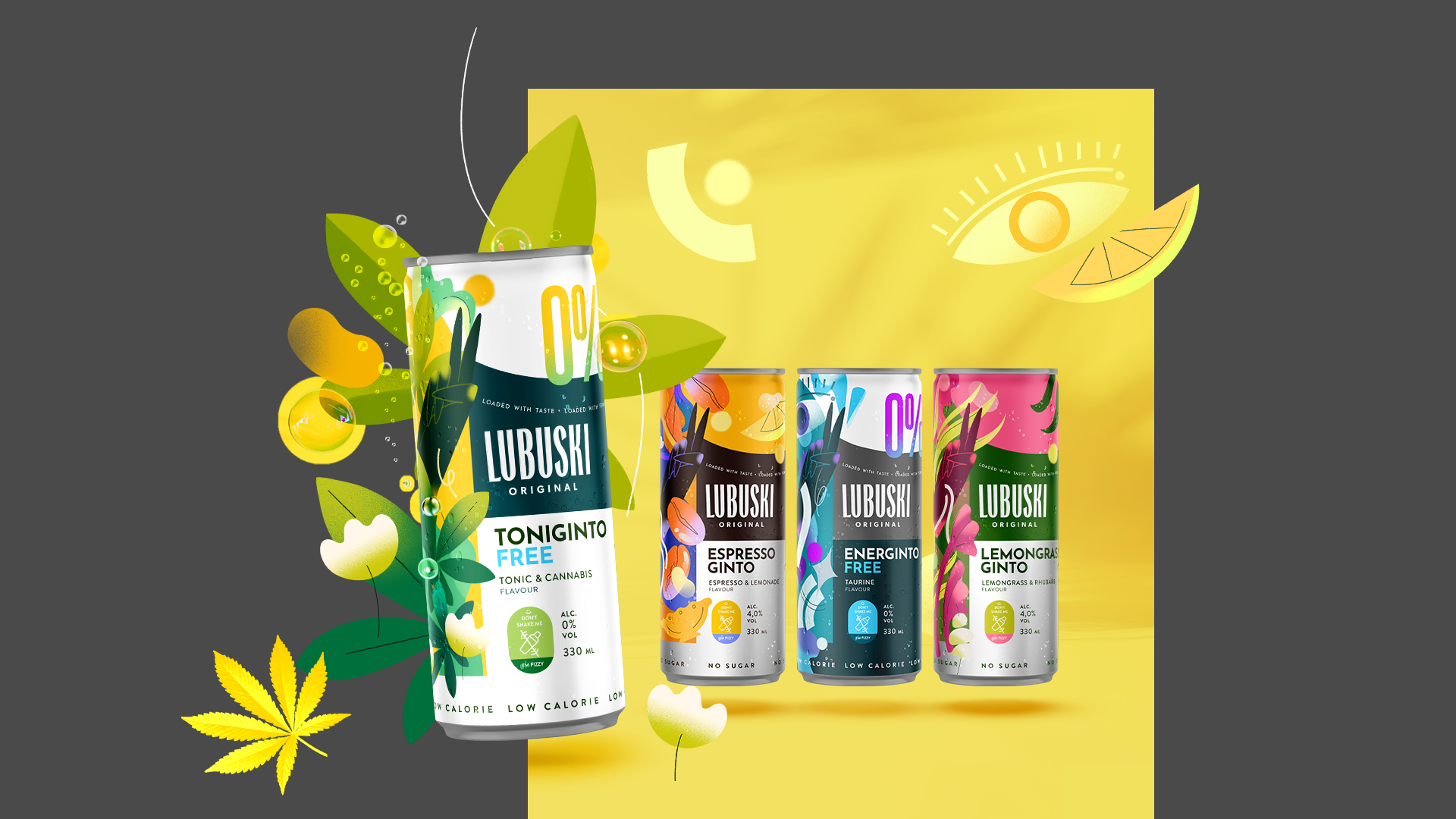
Even though we use AI in our daily practice to better our work, we use it for appetizers or as a photoshoot replacement; it’s also an important part of research or analysis, but we don't rely on it. A great example that embraced individuality was our design for canned drinks for Lubuski.
Our Creative Coordinator, Sandra Chojecka-Wiosło, based it on hand-drawn digital illustrations and presented a more casual, fresh look for the packaging. The pairing of simple typography and colourful forms made the design stand out on the shelf, and the client got something unique that won’t be found on stock websites (full of AI slop).
The human touch is what makes design distinctive. As designers, we need to understand how to combine it with new technologies without falling into the trap of mindless creation. Used thoughtfully, AI can fasten research and prototyping, leaving designers more time for creative work and developing the strongest ideas.
The value lies in knowing which ideas are worth developing, how they support a brand, and how they will work in the real world. The specialised knowledge that’s behind any good design becomes pricesless with the popularisation of lower quality (accesible) projects. Therefor communication has become such an important part of the designer’s role: clients need to understand not only what they are paying for, but why certain decisions are being made. That’s why working with an experienced agency can bring brand perspective and a clear creative direction to the process.
The time has come when designers can relate to the abstractionists a little bit. AI image generators can produce polished compositions from a single prompt. Platforms like Canva provide anyone with a “good-looking” layout in minutes. The barrier to entry has dropped so significantly that the thought and experience behind the design have become easier to overlook. New tension has arisen between clients and designers, making collaboration harder, because accessible tools are not synonymous with skills, but they are often perceived as such.
Communication aid or new obstacle?
More and more often, clients come to the table with ideas already visualised, through generative AI tools. On one hand, this looks like a helpful change in communication. And in many ways, it is. It shortens feedback loops and helps us understand expectations. But on the other hand, when a client arrives with something “already designed”, it in a way takes the creative power and authority from us. This gets intensified when AI-generated visuals ignore real-world constraints: production limitations, brand consistency, scalability, or even basic functionality.
Telling the harsh truth is a part of the job; the important next step, offering solutions, became harder with unrealistic expectations of immediate results and the constant approbation that AI normalises. This works, however, only when the designer’s expertise is not diminished. Rapid development influences the design process and client collaboration; the key is staying up to date and a good approach. We go into more depth on our strategy in this article.
Two layers to accessibilityAdobe remains the industry standard; they win the Monopoly game when it comes to designer tools. And it shows in their prices. Ironically, the tools that allow designers to work faster and focus more on creative thinking are often the least accessible financially. In that sense, efficiency becomes a luxury.
Alternatives like Affinity (acquired by Canva) disrupted this model by offering professional-grade software without the need of subscription. For a moment, it looked like a shift towards accessibility. But what is available for free doesn’t allow for the focus on creativity. The automation of mundane tasks isn’t as flawless, even in simple tasks like cutting out objects from a background. So although the battle to destroy the monopoly has begun, the journey will be longer.
History suggests that tool dominance isn’t permanent. In the 90s, QuarkXPress was the industry standard for publishing. Adobe introduced InDesign and gradually reshaped the market. Today, Affinity positions itself as a challenger to Adobe in a similar way. But we can’t forget that the place on the podium has belonged to Adobe for more than 20 years now, and it has allowed them to grow and improve their offering, which is now hard to outdo.
When it comes to ease of use, Canva is one of the clearest examples of platforms improving design accessibility. Templates, automation, and machine-learning-driven suggestions make it possible for non-designers to produce professionally looking work. It’s great for those who want to learn to create as individuals and don’t have the budget. It makes it easier and cheaper to become a self-taught designer.
But is this the best way to learn? Are people more aware of layout, typography, and composition than they were? How does the accessibility of templates, not to mention generating images with one prompt, impact the quality of the industry?
At this point, clients must understand that we design strategically to help target specific customers; the function of design is as important as the looks, and the expertise designers have (and work for) is what makes it valuable and works in clients’ favour. There’s often the invisible function behind the aesthetics and the reason for well-designed ugliness that I’ve touched on in a different article, but it shows that there’s more to it than a template.
Drowning in AI slopEvery major change in the industry (not only in the artistic fields) results in a shift and de-specialisation of said sector. There’s no doubt that accessibility has brought significant benefits, but it also contributes to the decline in quality.
Each time I go to LinkedIn, I see a wall of AI-generated posts, text, graphics, sometimes even comments. Maybe it works beneficially for my mental health because it makes me close the app, but is this the point of all of this? Is it all about quantity? Do we really need to post one piece of content every day, when clearly we’re not able to produce it ourselves? I feel like it hits harder when you realise that we delegate the creativity, one of the most human values.
We’re seeing an oversaturation of AI-generated content: quickly produced, often without depth or intention. Platforms are flooded with work that lacks clarity or purpose. Even when the message is interesting, the delivery is repulsive due to recognisable AI slop.
The value lies in knowing which ideas are worth developing, how they support a brand, and how they will work in the real world. The specialised knowledge that’s behind any good design becomes priceless with the popularisation of lower-quality (accessible) projects. Therefore, communication has become such an important part of the designer’s role: clients need to understand not only what they are paying for, but why certain decisions are being made.
AI-notifiedFor someone in the industry, it can be easier to judge whether a picture was generated, but it’s becoming harder with each day, especially if the work is well done. European Union has introduced a law requiring AI-generated or modified graphics to be signed to prevent misleading consumers. It doesn’t concern all designs, but as the European Commission has stated, we need to mark every „AI-generated image of a product in advertisement or packaging that can affect the audience's perception and mislead as to the actual product appearance, characteristics or use.”
It’s the first major decision on this topic, and it obligates designers to be more transparent with their commercial work. This may also change the design process itself. Designers and agencies need to distinguish between fully generated and partially modified images, and discuss disclosure requirements with clients before publication. The commission has presented free symbols for use, different for fully generated images and different for those only modified.
With the growing reluctance towards AI, this change can heavily impact the industry and influence how clients view projects, not to mention changes in customer choices. There’s a high probability of a comeback of human-made photoshoots, or more artistic designs that still have looser rules in this department. We will see how it develops in the near future, but for now we need to be aware of this obligation and pay attention to obey it.
The new role of designers
Even though we use AI in our daily practice to better our work, we use it for appetizers or as a photoshoot replacement; it’s also an important part of research or analysis, but we don't rely on it. A great example that embraced individuality was our design for canned drinks for Lubuski.
Our Creative Coordinator, Sandra Chojecka-Wiosło, based it on hand-drawn digital illustrations and presented a more casual, fresh look for the packaging. The pairing of simple typography and colourful forms made the design stand out on the shelf, and the client got something unique that won’t be found on stock websites (full of AI slop).
The human touch is what makes design distinctive. As designers, we need to understand how to combine it with new technologies without falling into the trap of mindless creation. Used thoughtfully, AI can fasten research and prototyping, leaving designers more time for creative work and developing the strongest ideas.
The value lies in knowing which ideas are worth developing, how they support a brand, and how they will work in the real world. The specialised knowledge that’s behind any good design becomes pricesless with the popularisation of lower quality (accesible) projects. Therefor communication has become such an important part of the designer’s role: clients need to understand not only what they are paying for, but why certain decisions are being made. That’s why working with an experienced agency can bring brand perspective and a clear creative direction to the process.